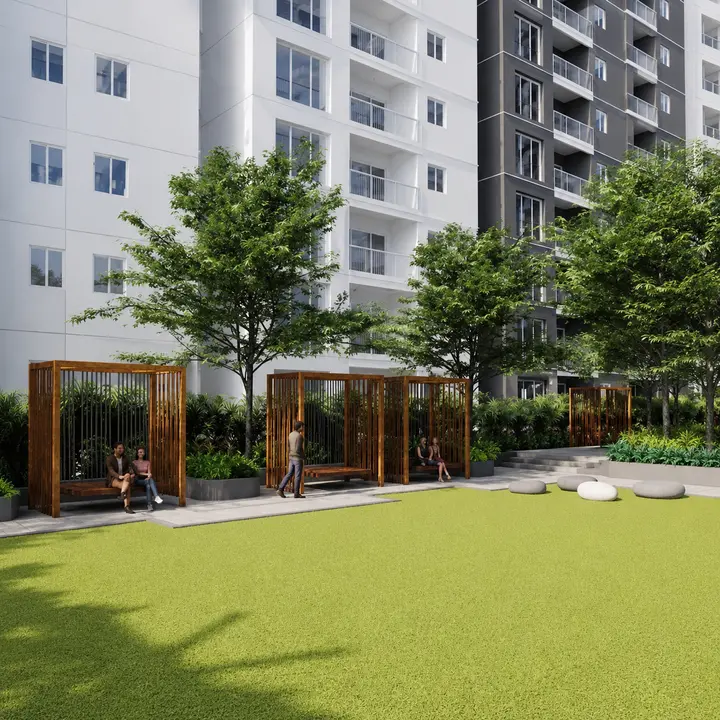
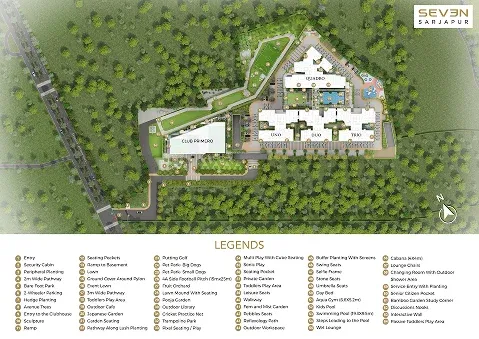
Fortune Primero Seven Sarjapur Master Plan: high-rise tower planning.
Master Plan

Fortune Primero Seven Sarjapur Master Plan: high-rise tower planning.

The safest master-plan description is four high-rise residential towers with 779 apartments, basement parking, landscaped open areas and a clubhouse-led amenity core. Sky bridges, themed gardens and rooftop leisure should be treated as promoted design features until matched to current plans. For related details, also review the pricing and contact before finalizing next steps.

Fortune Primero Seven master plan
Tower Layout

Fortune Primero Seven Master Plan: towers, parking and amenities.

Current public material points to a high-rise community rather than a simple apartment cluster. The plan should be reviewed for tower spacing, basement parking flow, amenity access, fire movement, lifts, service areas, and the location of any commercial or retail component.

Because land-area references differ, buyers should request the sanctioned site plan and RERA uploads before relying on either 10.89-11 acres or 15 acres as the final figure.

Review Master Plan Request Sanctioned Plan
Master Plan Analysis

Fortune Primero Seven Master Plan: towers, movement, amenities and caveats.

Four-tower high-rise structure

The master-plan story should begin with the format: Fortune Primero Seven Sarjapur is a high-rise apartment community, not a low-rise land product. Public references describe four towers and 779 apartments, with 41-floor positioning. That tower scale influences every practical question on the master-plan page, from lift allocation to basement parking, fire access, visitor movement, landscape placement, and amenity crowding.

A four-tower plan can feel efficient when tower spacing, walking paths, arrival zones, and amenity access are handled well. It can feel congested when movement is poorly separated or when too many daily functions depend on one narrow circulation point. Buyers should therefore ask for the latest master plan, basement plan, fire-tender movement plan, and tower-wise circulation diagrams instead of relying only on renders.

The page uses high-rise vocabulary deliberately: tower, podium or ground movement, basement parking, clubhouse access, landscaped pockets, service movement, and vertical circulation. That keeps the discussion aligned with the real apartment product and avoids older language that belonged to a different property format.

Parking, entry and internal movement

Basement parking is an important part of the planning claim because daily convenience depends on how residents, visitors, delivery staff, service vehicles, and emergency vehicles move through the site. Buyers should ask whether parking is fully basement-led, how many car parks are bundled or chargeable, whether visitor parking is separate, and how far the lift lobby is from the allotted parking bay.

Internal circulation also affects safety and noise. A large community should ideally separate pedestrian paths, vehicular loops, service movement, and visitor drop-offs. If children, seniors, and vehicles all compete for the same movement spine, the landscaped promise may not feel as comfortable in use. The master-plan review should therefore focus on actual movement diagrams, not only on amenity labels.

The approach to each tower matters as much as the central clubhouse. Ask where the lobby sits, how many lifts serve each stack, whether service lifts are separated, how refuge floors are handled, and how emergency access works around the building footprint. These are not decorative details; they determine the lived quality of a 41-floor high-rise community.

Amenities and marketed sky-bridge claims

Marketing material promotes sky bridges, themed gardens, a large clubhouse, extensive amenities, open-space percentages, and no-common-wall positioning. These may be meaningful differentiators, but the master-plan page treats them as claims until written scope is reviewed. Buyers should ask where each amenity sits, whether it is delivered in the first phase, who can access it, and how maintenance cost is allocated.

Sky bridges deserve especially careful reading. They sound premium and can create a memorable identity for a high-rise project, but buyers should verify structural approval, safety treatment, access control, timing, and whether every residential tower benefits equally. A promoted feature is only valuable if it is delivered, usable, and maintained in a way residents understand before possession.

Open-space language also needs document support. If public listings suggest about 10.89 to 11 acres while campaign pages mention 15 acres in a broader context, the master-plan page should not present one acreage as settled without checking the sanctioned plan. The residential portion, commercial or retail portion, landscape area, driveway area, and built footprint should be read separately.

What to request before trusting a layout claim

The best master-plan pack includes the latest sanctioned plan, tower layout, typical floor plan, basement parking plan, fire access diagram, amenity schedule, landscape plan, and any phasing note. If the sales deck mentions 85% open space, 100+ amenities, 35+ gardens, or no common walls, ask where those statements appear in the official brochure or agreement annexure.

Buyers should also compare tower position with their chosen unit. A unit near an amenity edge may have convenience but more noise. A higher floor may bring view value but more floor-rise cost. A tower farther from the entrance may feel quieter but add walking time. Master-plan evaluation is strongest when it connects the overall site arrangement to the exact apartment being considered.

The document pack matters because most of the project story depends on written commitments. The RERA number is useful, but a buyer should still compare the RERA certificate, sanctioned drawings, agreement draft, payment schedule, possession clause, carpet-area statement, latest brochure, amenity annexure, and tower-wise construction status. If any sales statement is important to the decision, it should appear in a document that can be retained.

Planning Detail

Fortune Primero Seven Master Plan: what to verify beyond the brochure diagram.

Tower placement and privacy

Tower placement controls light, view, privacy, noise, and everyday movement. A buyer should ask where each tower sits within the site, how far towers are from one another, which sides face internal amenities, and which sides face roads or neighbouring development. The answer can change the value of two apartments with the same configuration and similar area.

Marketing language around no common walls or corner-home planning should be tested against the typical floor plan. If only four homes sit on a floor, that may support privacy, but buyers still need to see lift-core position, corridor length, service shaft location, and whether bedroom walls or balconies face another apartment. Privacy is a plan-level detail, not only a slogan.

The master-plan page should also encourage buyers to think about future noise. Apartments facing the clubhouse, pool, play area, or entry court may enjoy a better view but more activity. Apartments farther from activity zones may feel quieter but less convenient. The best choice depends on household preference, not only on the developer's premium label.

Phasing and handover sequence

In a large under-construction project, phasing can affect early residents. Ask whether all four towers are handed over together, whether amenities open with the first residential possession, and whether residents in an early tower will live beside ongoing construction. These questions influence comfort during the first few years after handover.

The delivery sequence also affects maintenance. If amenities open later, buyers should understand whether maintenance starts immediately, whether any temporary facility is provided, and how common-area charges are handled during phased completion. A strong launch promise should be accompanied by a practical handover plan.

If commercial or retail components are part of the broader land story, ask how their access, parking, security, and maintenance responsibilities are separated from the residential community. A mixed context can be convenient, but the master plan should show clear boundaries so residents understand what they share and what they do not.

Safety and operations

High-rise master planning must be read through safety. Fire-tender access, refuge areas, emergency exits, lift backup, water storage, evacuation routes, and service movement should all be part of the approved design discussion. Buyers do not need to interpret every technical drawing themselves, but they should request confirmation that the project has the required approvals.

Operations matter after safety. Waste movement, housekeeping routes, delivery access, visitor control, and security check points can either support or disturb daily life. A well-designed community keeps these functions organized. The master-plan page therefore treats service planning as part of residential quality, not as a back-end issue.

Before booking, ask for the latest plan pack and confirm that the apartment being offered appears in the same tower, stack, and floor relationship shown in the drawings. If the sales material is a simplified diagram, request the detailed version before relying on it.

Master Plan Closeout

Fortune Primero Seven Master Plan: final planning checks.

Connect the site plan to the selected apartment

The buyer should not stop at understanding the overall master plan. The final check is how the selected apartment relates to that plan. Is it near the entry, clubhouse, pool, landscape, service route, road edge, or another tower? Each relationship changes daily experience.

Ask where the allotted parking sits in relation to the lift lobby. A premium apartment can feel inconvenient if parking access is awkward or if visitor movement interferes with resident movement. Parking design is part of master-plan quality.

Check how construction phasing affects the chosen tower. If another tower, amenity, or commercial component is delivered later, ask what residents will experience during that period. Early possession can be attractive, but only when interim conditions are understood.

The final master-plan decision should be based on drawings, not only a simplified render. Keep the sanctioned or latest plan version with the cost sheet and apartment plan before signing.

Final Note

Fortune Primero Seven Sarjapur: final verification note.

If the selected apartment is sold as premium because of tower position, view, privacy, or amenity access, ask the sales team to mark that unit on the latest plan. A highlighted plan is easier to review than a verbal description and helps the buyer connect the master-plan promise to the actual home being considered.

Due-diligence references

Maps, regulators, and corridor context.

Compare the master plan with the enquiry desk, the project map, and the Karnataka RERA portal before relying on any sales claim.